

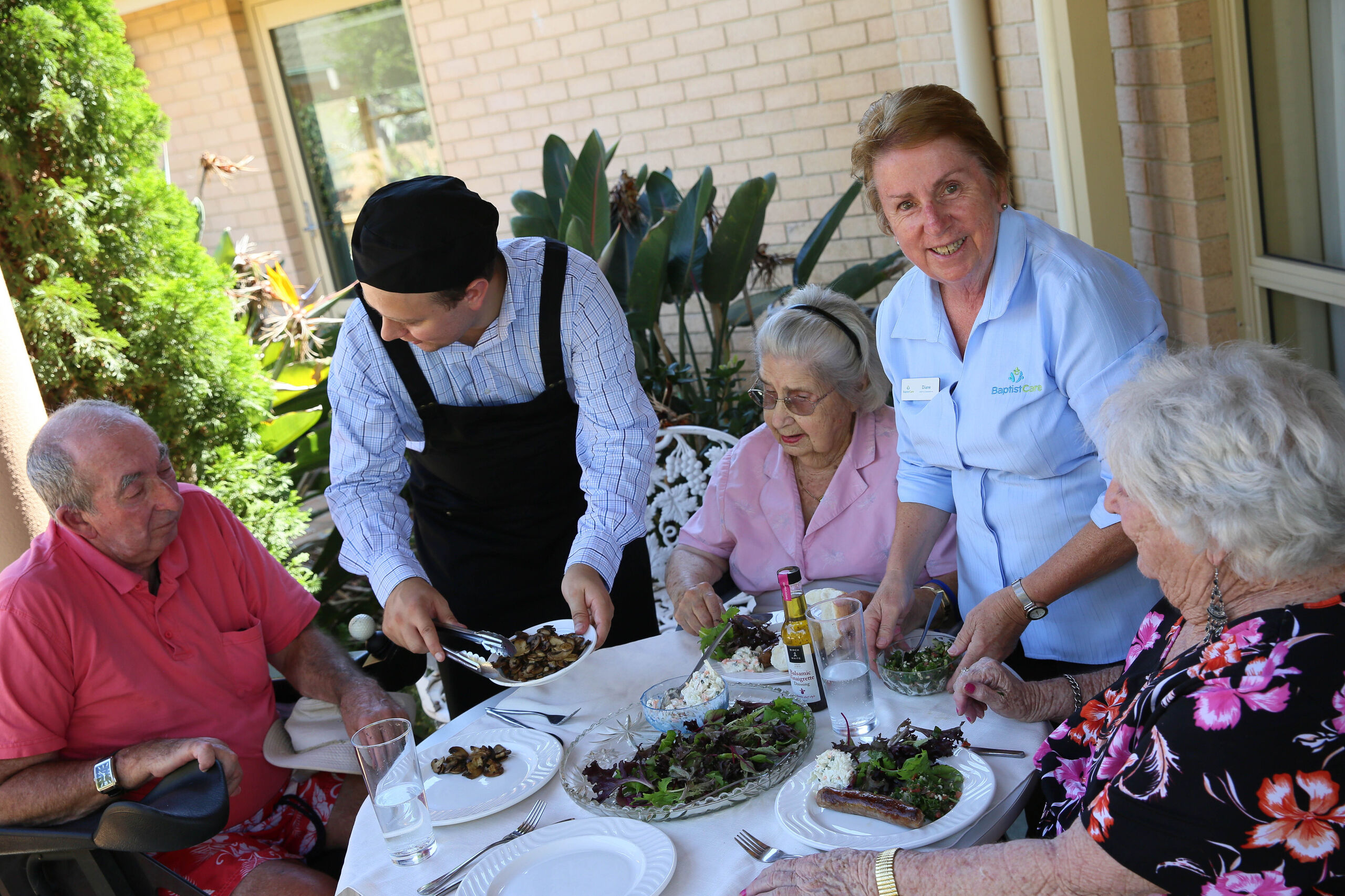
Nobody can relax and enjoy a meal if they aren’t first comfortable in their surroundings. This is why servery and kitchen teams will focus on creating a homely and relaxed dining room environment.
“It’s about making the residents feel completely at home,” says Stuart Walton, Manager of Hotel Services across 23 BaptistCare residential aged care homes. Stuart is passionate about delivering a holistic dining experience that’s consistently great across all our sites.
“It’s not about replicating a fine dining environment– the dining room needs to feel like an extension of the residents’ home. Which it is.”
As residents get settled in the dining room, they will be met by the appetising aromas of food wafting over from the kitchen. They may hear the sounds of kitchen staff in the servery, and they will see the trays being organised and tables laid.
Engaging all the senses like this tends to work wonders on even the smallest of appetites, and contributes to a fulfilling dining experience.
Stuart explains, “This is where the menu really comes to life. An item stops becoming something that’s just imagined and starts to fulfil expectations of taste and smell.”
“It’s the degree of synchrony between expectation and taste that decides how much someone enjoys their food.”
Stuart tells us this is something that we all do without thinking, every time we eat.
Next time you’re about to take your first bite of that perfectly cooked ribeye, think about the myriad expectations you have. You’re prepared for a certain kind of texture; a salty, meaty flavour with a slight hint of iron. There might be the added flavours and textures of gravy.
If some or all of these expectations don’t match up to what you experience – or even worse, you don’t know what it is you’re eating - this can hugely disrupt the brain’s interpretation of flavours.
At BaptistCare, our chefs understand this psychology and work hard to meet residents’ expectations throughout the dining experience.
For example, residents are given visual menus to understand what the dish will look like, and staff also describe the food to them as it is served.
For those residents who require feeding assistance, food is always within view so that they can clearly see what it is they are eating. If they are visually impaired, care staff will explain what each mouthful looks like.
“It’s this kind of detailed, person-focused care that can make all the difference for residents,” says Stuart.
Food safety is paramount when it comes to aged care catering.
At BaptistCare, we take this very seriously, and our teams engage in mandatory annual training to ensure that we continue to work within the strict parameters of our food safety program. This is in line with the NSW Food Authority, and the Health Protection Service in the ACT.
As of April 2023, all BaptistCare residential aged care homes have been awarded “A” ratings for food and hygiene safety, a testament to our team’s commitment and hard work in the space.
“A big part of this is about temperature control,” says Stuart. “Cooking food to 75 degrees kills off any pathogens, which is especially important when working with people who are immuno-compromised.
“Good hygiene is at the centre of all we do in the BaptistCare kitchen – our meals are delicious, but always ensure the safety of our residents, too.”
