Our nurses, our future: Why human connection will always be at the heart of community nursing
This International Nurses’ Day, hear from Melinda, a nurse with over three decades of experience caring for older people at home – and discover why this kind of nursing is so important for a healthy society.
Scroll to Explore
08 May 2026
In the rush of everyday life, we often miss the understated, quiet work of home care nurses. And yet their impact is, by any standard, profound – not just in the lives of the older people they care for, but rippling out to people of all ages in the wider community.
Through close care and encouragement, nurses help older people stay connected to the people and places around them – enriching their lives while enabling all of us to benefit from the wisdom, knowledge and stories of our older community members.
As we approach the international celebration of nurses on 6 May – the birth date of nursing founder, Florence Nightingale – we spoke with Melinda Emeagi to learn more.
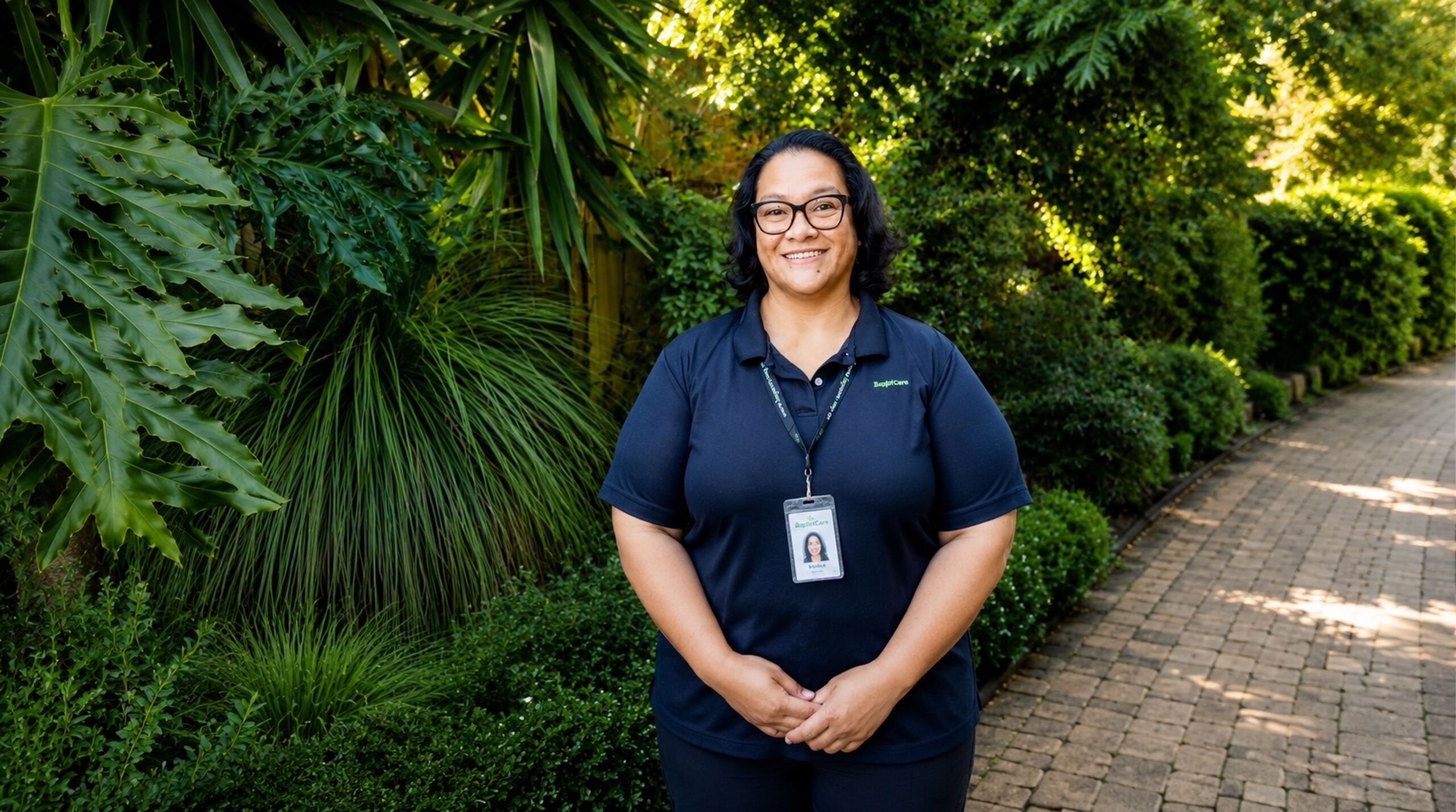
A BaptistCare nurse with over 30 years’ experience caring for older people in their homes across Melbourne, Melinda shares her insights into this vital area of care.
Why community nursing?
Surprisingly, nursing was never Melinda’s first career choice.
“It was actually my fourth preference when I left school,” she laughs. “I wanted to be a marine biologist – like all the kids in my class. But I’m so glad nursing was where I found my place in the end.”
Once she started nursing in the community, it quickly became clear she was exactly where she was meant to be.
“I fell in love with it,” she remembers. “People have always described me as caring, and I suppose that nurturing side of my personality made it feel like a natural fit.”
Melinda first joined BaptistCare in 1993 as a casual nurse, and apart from taking a few years out to care for her children as they were growing up, has been there ever since.
“I’ve worked briefly in hospital settings too - places like St Vincent’s, the Royal Melbourne and Epworth - but I’ve always come back to community nursing,” she says. “It’s more personal. You really get to know people in their own homes, in their own environment,” she shares.
Countering social isolation
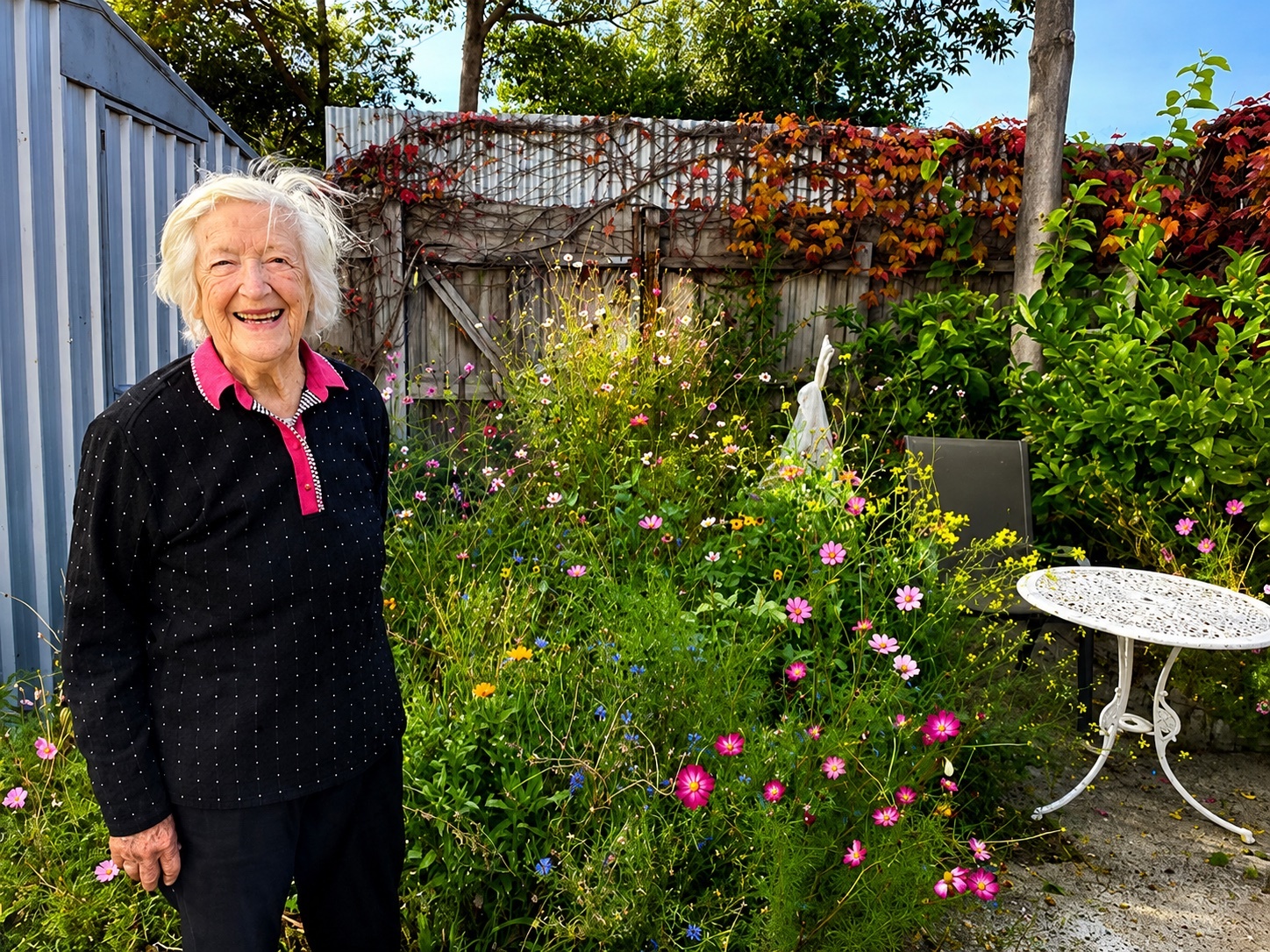
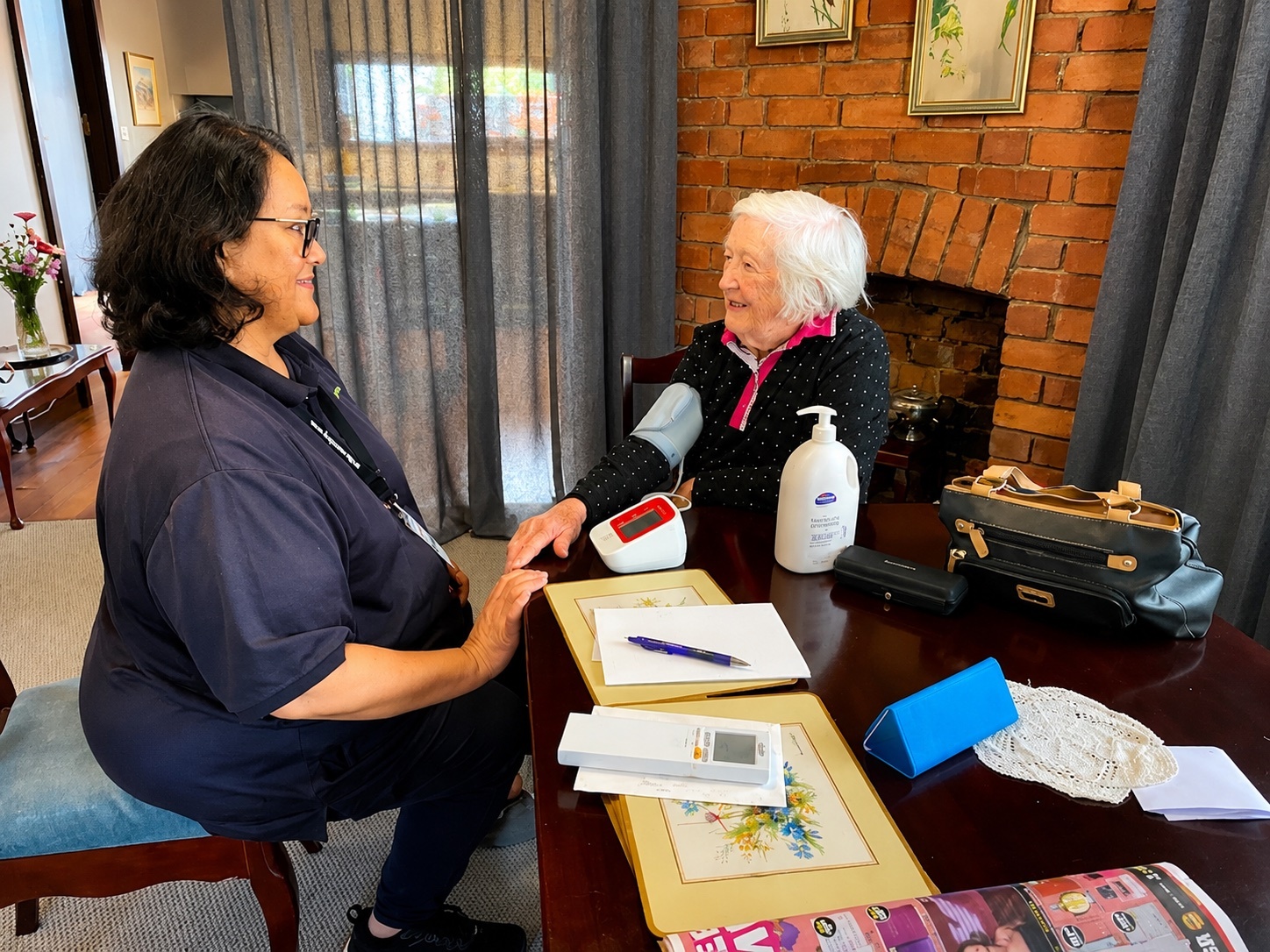
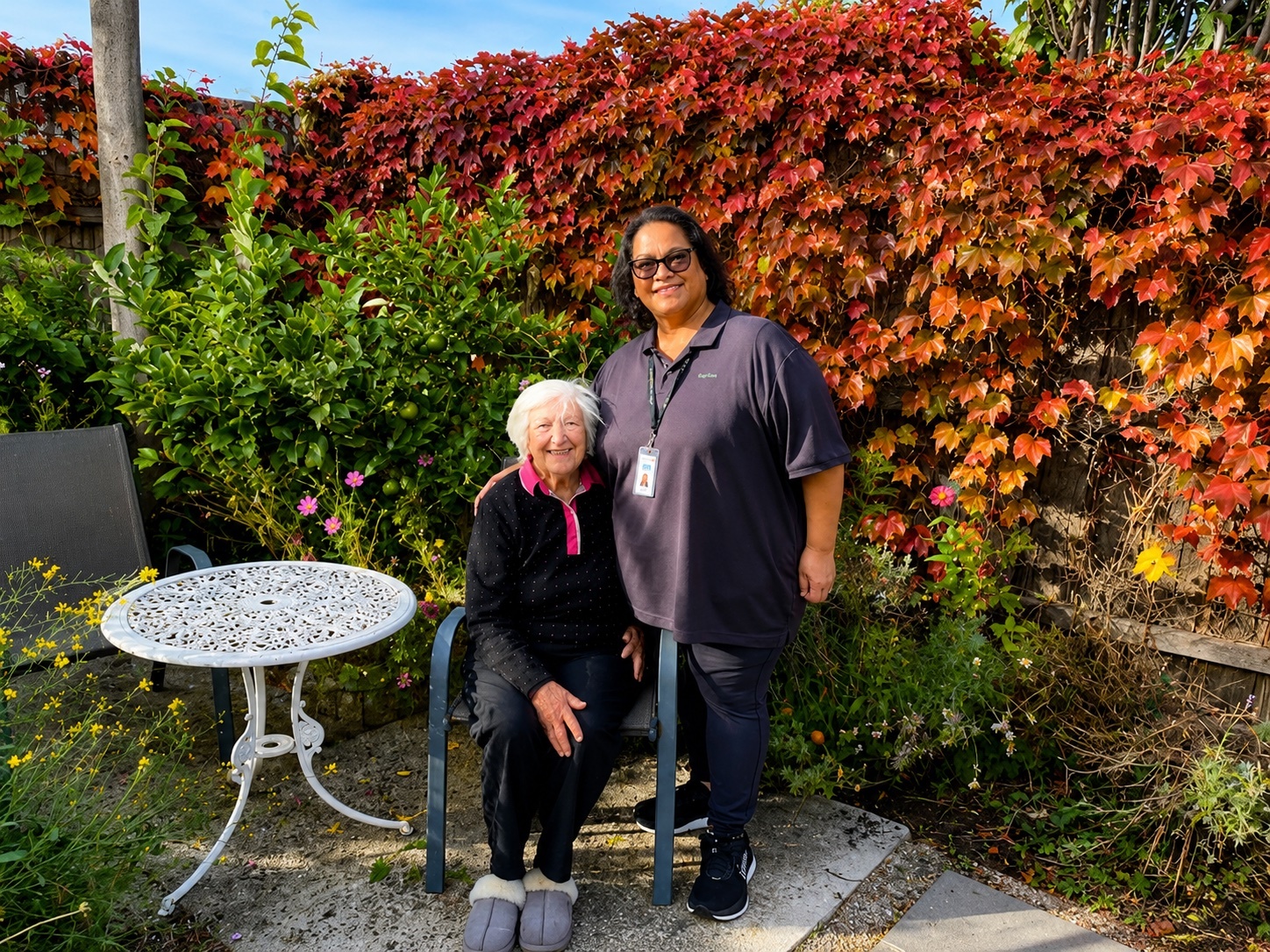
Lorraine, one of Melinda’s clients, is 96 years of age and living independently at home with the support of community nursing.
Providing care in a person’s own home means that nurses can have insight into their client’s social connections. Often, they are few and far between.
“Sometimes, nurses are the only person a client sees all day – or even all week. Our visit means everything to them.”
“People can lose confidence when they get older – they don’t feel as comfortable to try new things or get out and about – especially if they’ve had a recent injury or health concern,” says Melinda. “This can quickly lead to social isolation.
“Sometimes, nurses are the only person a client sees all day - or even all week,” Melinda says. “Some people don’t have family close by, or they’re estranged. Our visit means everything to them.”
Supporting clients overcome social isolation is something Melinda and her colleagues focus on every day.
A large part of this is about giving hope.
“We want people to have hope that they can live independently in the way they always wanted to, and that there is a path forward to achieve their goals,” says Melinda.
“The system is hard to navigate, and a lot of people don’t know what support is available to them,” she says. “Sometimes it’s about gently suggesting community groups or connecting someone with allied health like physiotherapy or podiatry.
“For some older people, change isn’t easy, so it’s about planting a seed. Encouraging them gently, over time.”
The big challenge of nursing
Something that facilitates this is taking the time to build a trusting relationship with clients, says Melinda.
But caring closely for people and investing fully in their wellbeing comes with a price - the inevitable grief when they pass away.
“When you look after people and get to know them over time, losing them is hard,” Melinda says. “You don’t always process it in the moment - sometimes it catches up with you later.”
“I ask myself: how can I make a difference today? Even if it’s a small one.”
Melinda’s way of coping is to allow herself that time to process each loss, as well as focusing on what she can control.
“I ask myself; how can I make a difference today? Even if it’s a small one. Sometimes it’s just making sure someone is comfortable, listened to, or treated with kindness.”
She’s also intentional about how she enters each visit, mindful of leaving any personal worries at the door.
“Nurses are people too, we all have our lives outside of work – but the moment you ring that doorbell, you’re 100 percent focused on that client. Everything else can wait.”
The small moments that matter most
That first greeting sets the tone for the visit, according to Melinda.
“You can achieve a lot with kindness and a simple smile,” she says. “You’re walking into someone’s home, at a vulnerable time in their life. You have to be friendly and fully present.”
It’s a simple enough concept – but Melinda says that when older people feel vulnerable, it’s those small actions that can make a big difference in their lives.
One moment that has stayed with her involved a client who was nearing the end of her life.
“She didn’t have the right bed at home and had been waiting for months,” Melinda recalls. “We were able to make calls and advocate for her, speeding up the process and finally delivering her that bed. The following week, she passed away.
“It might seem like such a small thing that we did for her before she died, but knowing you made someone even a little bit more comfortable, right before the end – that stays with you. That’s the impact we can have.”
What empowerment really looks like
Asked about her thoughts for this year’s International Nurses’ Day theme, “Our nurses. Our future. Empowered nurses save lives”, Melinda says that, for her, empowerment for nurses is about following your instinct.
“It’s about trusting your judgement,” she says. “Not being afraid to ask questions, to push a little, or to say, ‘No, I don’t think this is right.’
“If I could offer one piece of advice to my younger nurse colleagues, it would be to believe in themselves more,” she says.
“Sometimes people hold back because they don’t want to ruffle feathers. But as nurses, we have the relationships with clients, with sound knowledge and insight into their lives. Sometimes it’s worth a gentle push in the right direction to make a difference for them.”
The future of nursing
“You can achieve a lot with kindness and a simple smile” – building strong client relationships is integral to community nursing
When it comes to the future of nursing, Melinda is thoughtful - and honest.
“I’m uncertain about what nursing could look like for future generations,” she admits. “Technology and AI will keep growing, and while they can support care, they can never replace touch, presence, and human connection.”
She does, however, feel confident about one thing.
“Community nursing will always play an integral role in society,” she says. “You can’t replace someone driving to a person’s home, sitting with them, caring for them as a human being. That connection will always be needed.”
“Technology and AI can support care, but they can never replace touch, presence, and human connection.”
The roundup – 60 seconds of nursing reflections
We asked Melinda a few quick, closing questions — moments that capture what nursing means to her.
If nursing had a soundtrack, which song would feature? Stayin’ Alive by the Bee Gees. Clearly the physical aspect of that is the baseline of what we do in the medical profession, but there are so many layers to it – staying alive emotionally, socially, intellectually, and perhaps reminding us nurses to keep going too!
What advice would you give to your younger nurse-student self? Care for people the way you’d want to be cared for - genuinely. I always think about how I’d treat my own mother - it guides everything I do.
Finish this sentence. Being a nurse has taught me… Everything. It’s taught me empathy, patience, advocacy, and how to deal with the unexpected. It’s also taught me that you can’t ever label people - you have to dig deeper and find out what’s influencing their attitudes and behaviour.