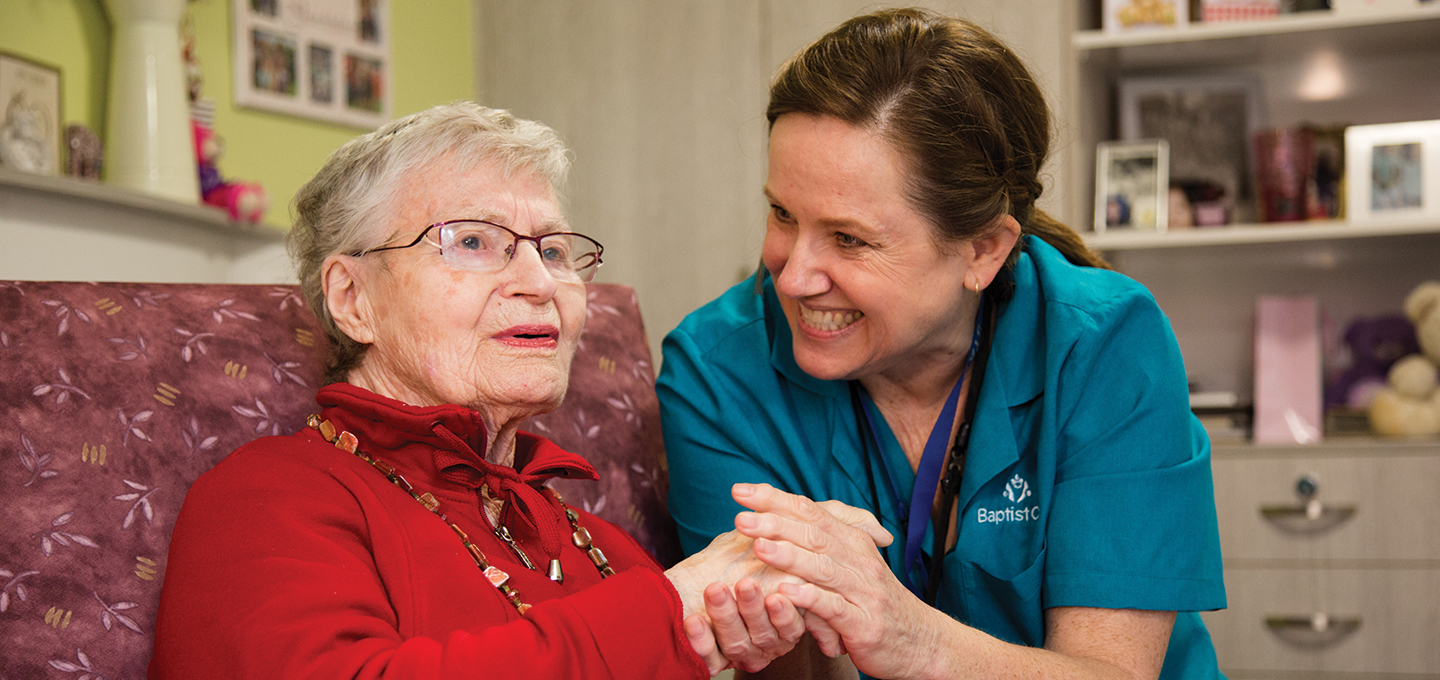
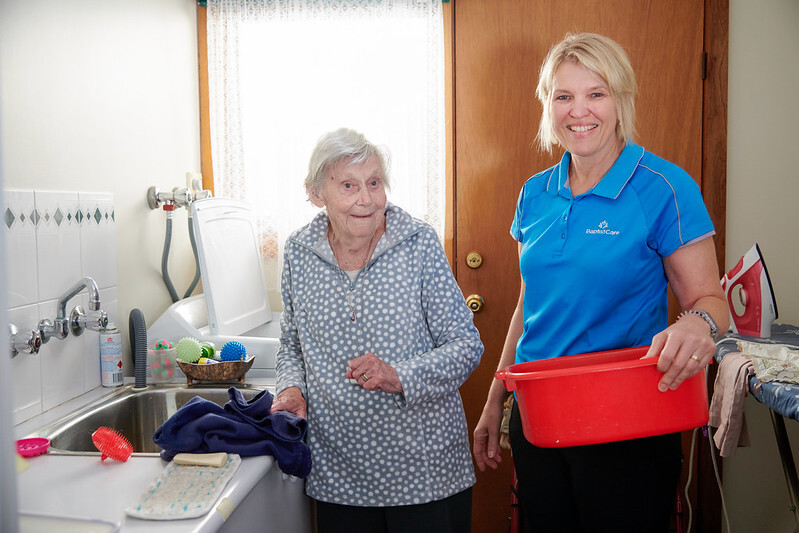
“It’s predominantly about the feel-good factor,” says Rebecca. “Many of our care workers get a real kick out of improving the quality of life for others, in whatever small form that might be.”
Whether it’s serving lunch, helping someone get washed and dressed in the morning, or simply lending a caring ear over a cup of tea, the day-to-day work of an aged care worker has a huge impact on their clients’ lives.
Aged care staff also tend to build stronger connections with co-workers than in other industries, bonding over a shared passion for their work. It’s not uncommon for staff to develop long-lasting friendships, boosting their sense of job satisfaction.
Working in aged care will help develop skills that are highly transferrable, opening up pathways for professional development.
“Many senior managers in aged care began their careers as care workers,” says Rebecca. “They worked their way up using their extensive knowledge and experience of front-line service delivery.”
Some care workers go on to become an expert in a specific field such as palliative care or pain management, allowing them to provide specialist care in the area they are most passionate about.
“The aged care sector is never shutting down.”
With recent developments in healthcare, people are living significantly longer, and by 2044, there will be 14 times as many people over the age of 85. Aged care workers can enjoy long-term job security, with no shortage of work over the coming years.
As Rebecca told us, “the aged care sector is never shutting down.”
“COVID-19 sparked ‘the great resignation,’ with many people re-evaluating their career choices,” says Rebecca. “After all that instability, many chose to move into more meaningful work like aged care which offers that long-term stability.”