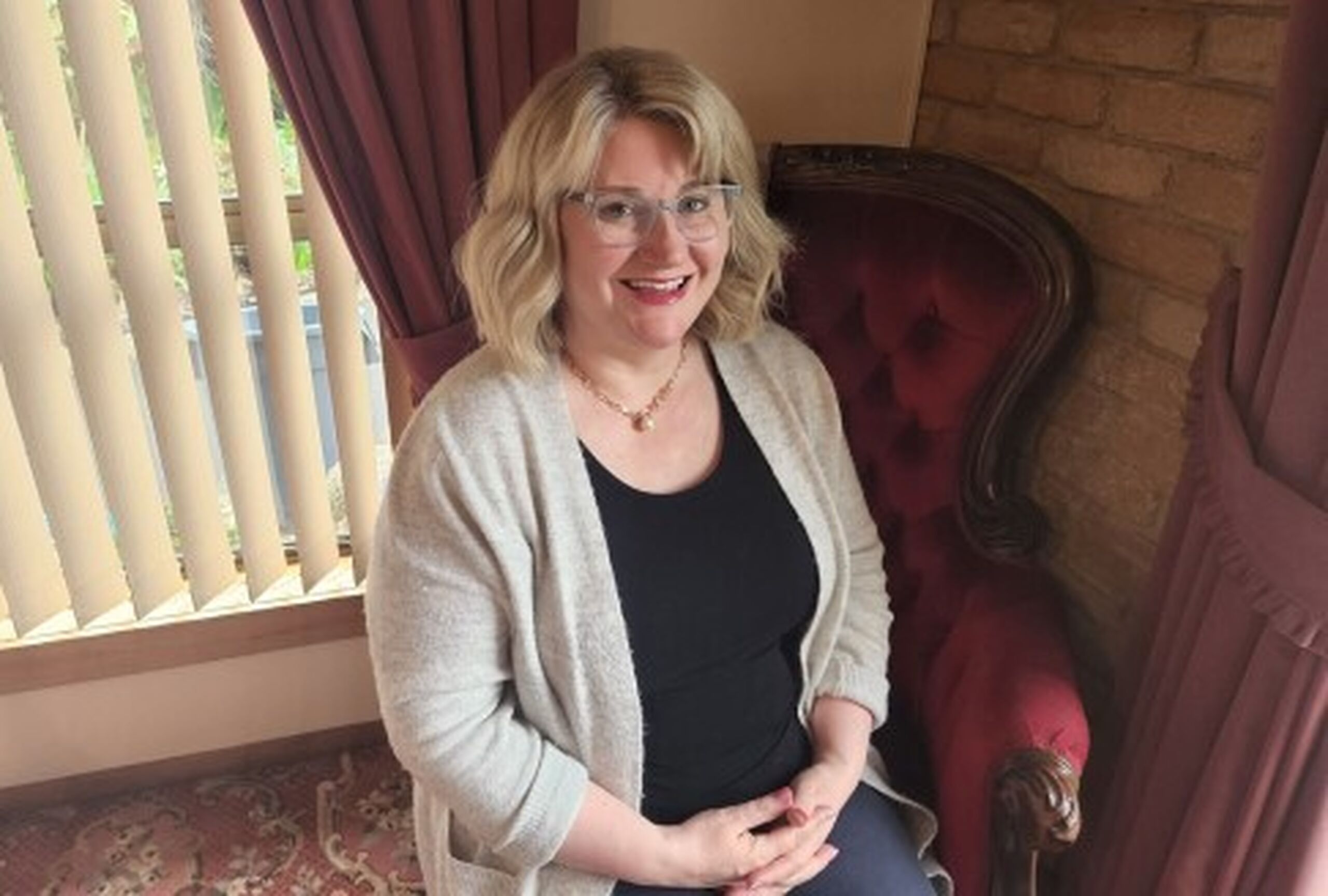
Lana Davis is our Volunteer Program Lead at BaptistCare, known for her bright and bubbly personality and boundless energy. What many people do not realise about Lana is that she is living with two invisible disabilities, also known as hidden or non-visible disabilities.
Lana has graciously agreed to share her story about living and working with invisible disabilities, including some useful tips on the support systems and resources she has found helpful in her personal journey.
What is your disability and how does it affect your daily life?
I am both neurodivergent and suffer from haemochromatosis, otherwise known as iron-overload disorder.
Both conditions impact my daily life in varying ways and degrees of difficulty. Being neurodivergent, I often struggle with anxiety and being overwhelmed when physically in a meeting with a lot of people. I suffer from rejection sensitive dysphoria which is when a person feels intense emotional pain related to rejection and as such I tend to withdraw from social situations. It’s the one thing people don’t tend to recognise about me when I am working, as I am generally bright, bubbly and engaging – always the one to be making people feel more comfortable by providing a joke to lighten the mood.
With haemochromatosis, I experience pain in my joints, extreme fatigue, lethargy and aches in the body. Food rich in iron can often taste strange and my body doesn’t absorb B12 due to something referred to as an intrinsic factor in my stomach, so I have to take supplements.
How did you discover/diagnose your invisible disabilities? What was the process like for you?
With haemochromatosis, I was diagnosed at 21 which is actually quite young for a female with most not being diagnosed until they are post-menopause. I would wake up from a nap and feel as though I hadn’t slept in days. Initially, I was being tested for anaemia (low iron) which is when they found I was the opposite – my body registered four times the normal amount required by the female body.
I was diagnosed as neurodivergent in my 30s, as women are often taught to mask their symptoms as children. I’m grateful that every day we are learning more and more about these conditions and that the range of support and treatments available are growing all the time.
What are some of the common misconceptions about people with invisible disabilities? How do you deal with them?
If someone has a physical disability, people can see this, and they offer assistance. I’ve been slim and I’ve been overweight and in the majority of cases, people opened the door for the slim girl, but they didn’t for the overweight one (who was more likely in need of assistance).
For those of us suffering from invisible disabilities we are often labelled as ‘lazy,’ a ‘whinger/moaner’ or of having low self-esteem. This isn’t true, in fact we are some of the hardest working people you will ever meet as we have always had to do things for ourselves. We set our own bar for how much we achieve and we can be very competitive in spite of our afflictions.
We are often incredibly well organised when it comes to our work life, but at home this sometimes brings us unstuck as we tend to give, give and give to our work as we enjoy it so much and are constantly in search of the next hit of dopamine that our work provides us and – let’s face it – housework doesn’t provide a rush for most people! We often have to question: what is happening to us – is it because of our label or a genuine response to what is happening? It can be difficult to balance and manage.
What are some of the challenges you face because of your invisible disability? How do you deal with these?
Maintaining my home and car, these are the two things I find trickiest, and I never know if it’s because of how I am feeling or because I have a hurricane of a four-year-old who seems to bring my hard work unstuck! But my love for him is epic, regardless.
One thing I try to do is get anything physical out of the way first thing in the morning. That way, the hardest part of my day is done. Whilst I experience extreme fatigue, I often cannot sleep which is why some of my best work is done between 1am and 5am because I am not interrupted and can go flat out, albeit quietly because everyone else is sleeping!
What are some of the benefits you feel you’ve gained from experiencing this invisible disability?
I’ve been able to achieve my dream job, without a university degree!
Few people can say they love what they do, but I do and passionately so. My work isn’t always sunshine and rainbows, there are challenging and frustrating parts, too, like every job. But, every day I am offered the opportunity to bring continuous improvement to our Volunteer Programs, work with the most exceptional people both in my own team and in the broader teams we connect with who are genuine in their connection and are passionate and driven to provide the very best outcomes for BaptistCare, which is something I am so very grateful for and appreciative of.
In this role, I look at what we have been able to achieve and we’re constantly kicking goals. Our list of things we want to achieve is miles long and almost every day we achieve something new. We are big on living the BaptistCare We Care values daily in our team and it makes all the difference.
Do you have any tips to share with others who have a similar invisible disability?
I think you need to look at what does a successful day look like for you, what happened to support the achievement of this and then try to replicate it.
There is a heap of free apps like ‘Remember the Milk,’ ‘Brain Focus’ and Microsoft’s ‘To Do’ which integrate across multiple devices so you can always have your lists on hand. These apps help you focus, plan and monitor your days so you can continue to be the very best version of yourself.
You can try playing white/pink/brown noise clips on YouTube that are available to assist you with focus, relaxation or sleep (depending upon what you need).
Our Employee Assistance Program (EAP) through Converge is also a great tool. If you are neurodivergent, you can ask for a consultant who either is from this community or has experience in this field – you and your family have up to six sessions a year, per person, which clocks over annually from the start of your first session. With EAP, remember that it can be for preventative health as well as post trauma.
How does BaptistCare support you?
Having a flexible role is the first level of support and providing access to the EAP has been brilliant. Being able to apply for short periods of leave without being made to feel bad – all these little things add up to me delivering on my goals and being loyal and happy in my role.
Having a Diversity, Equity & Inclusion Working Group where I can advocate for people like me is exceptionally rewarding. Being able to talk to my manager and manage my own schedule to ensure my work is done both well and on-time – like any relationship, it is important to have trust and we do.
I was personally able to purchase a monitor that is large and curved to support my eyesight as I can often sit at my screen for hours at a time not realising that I have been in the one spot for so long (hyper-focus). I also have a footrest that has a built-in shiatsu massager and foot warmer (which is needed in Tasmania’s winter). Sometimes it’s as much about managing your physical health as it is your mental health.
In your personal life away from the office, can you share some details about your support systems/resources that are useful?
- I try and do exercise first thing in the morning (because I hate it). I try to avoid the shops by doing online delivery. I have a solid relationship with my local IGA, and they know I will ask them to deliver which is something they tend to do only for those isolating due to contagious illness. It makes a difference to my pain levels.
- I sleep with my phone plugged into the charger and with a pink noise sound running through YouTube, because it’s free and because light and other outside noises keep me awake. I also try and tag-team with my husband when I need to do a chore that I know our son will interfere with. I ask him to play with him outside once it’s done, then it’s his turn to do his jobs because, guaranteed, if either of us blinks our little one is into something he knows he shouldn’t be!
- Communicating how you are feeling, what is challenging and what you need help with is a must. It’s okay to take a step back and say you are in pain, or something isn’t feeling right. Don’t subscribe to the gender norms of old. If you are in a relationship then you are in a partnership and sometimes it will be 50/50, other times 70/30 and so on. Talk to your significant other and let them know what percentage you are out of 100, have them do the same to you, look for patterns – do you/they need to do some self-care? What does that look like for each of you? You wouldn’t run any of your devices on low battery all the time, why do that to yourself?
What are some of the changes you would like to see in society or in the workplace for people with invisible disabilities?
- Being rid of the standard 8-4, 9-5 workplace requirements where there isn’t a need to be available 100% of the time (certainly, for some roles this likely won’t ever change, but for many, COVID-19 has proven it can and quite successfully).
- Providing workplaces where people can feel safe and supported in sharing their disability and that it won’t be taken advantage of. BaptistCare is one of the few workplaces where I have shared my story and it hasn’t been used against me. I think, in large part, it was because I proved my worth before openly declaring. It was scary and uncomfortable, but I was met with unwavering support from my people.
- Recognising no two days are the same. The strategy that worked for someone on one task or project may not necessarily work the next and that is okay.
- Training managers and staff to ask, “How do I best partner with you?” is one of the most powerful conversation starters I have coined during my time at BaptistCare – this applies across all areas of our work regardless of anyone’s capacity. It allows authenticity and respect for where each of us are at in our journey. From there, co-creation is guaranteed to ensue and be at the forefront (my favourite We Care value).
- Making sure that managers and teams are provided with resources and training to support them in managing someone who could be suffering an invisible disability, because many employees suffer in silence, being anxious/concerned that they will be told they no longer have a job or not promoted. Where supervisors and managers are provided with these skills, they approach performance management in a whole new light. It is as though they are seeing a person for the very first time. I remember that it was a manager who suggested to me that I might be neurodivergent. At the time I was highly offended until they showed me what my strengths were and how I could make perceived weaknesses into potential strengths. Not holding a diagnosis against me was deeply nourishing to my soul as a whole new world opened up to me and every day, I am learning new things, where I can help others.
Thank you Lana, for sharing such an intensely personal story. We are proud to have you as a member of our BaptistCare team!
If you would like to join BaptistCare and be part of our respectful and inclusive workplace which supports diversity and inclusion, please click here to explore our current opportunities. We welcome applicants who may require adjustments and have a strong focus on providing flexible working arrangements. Join us today!