This Allied Health Professions Day, discover how BaptistCare’s allied health team is helping Glenys build strength, confidence and independence in her own home.
Scroll to Explore
14 October 2026
Stories
| Home Care
Many of us know the benefits of physiotherapy, especially after an injury. Some know how occupational therapy can make daily life easier with a few simple recommendations, and many have seen what a well-placed rail or ramp can do around the home.
But fewer people realise that these services, and more, come together under one name: allied health. As the title suggests, it is a team of health care professionals who work together around one person, each bringing a different skill to the same goal of helping them move, function and live well.
It might include physiotherapists, occupational therapists, dietitians, podiatrists, speech pathologists, exercise physiologists and more.
Glenys found this out for herself just ten months ago, when a series of falls led her to ask for help from BaptistCare's home care team. Here is her story.
A whole new world - getting to know allied health services
Glenys, now in her mid-eighties, had already been receiving some help around the house for several years before she partnered with BaptistCare. But after an injury at home due to a fall, she decided it was time for some additional support.
“I decided to change providers to BaptistCare and Anna, my care manager, helped me work out what services could be beneficial for me,” Glenys explains. “We discussed what was happening for me at the time, my goals for the future, and what support could help me get there.”
"Until that conversation, I had no idea what kind of support was available."
— Glenys, BaptistCare client
Anna was able to arrange a suite of helpful services for Glenys, even while she was still waiting for a higher package of funding to come through via the government’s Support at Home scheme.
Some of these services included allied health, along with personal care and support around the house. It wasn’t long before Glenys was having regular physiotherapy and occupational therapy delivered to her in the comfort of her own home, as well as a few tweaks made around her house to make life easier.
Small steps that build strength and confidence
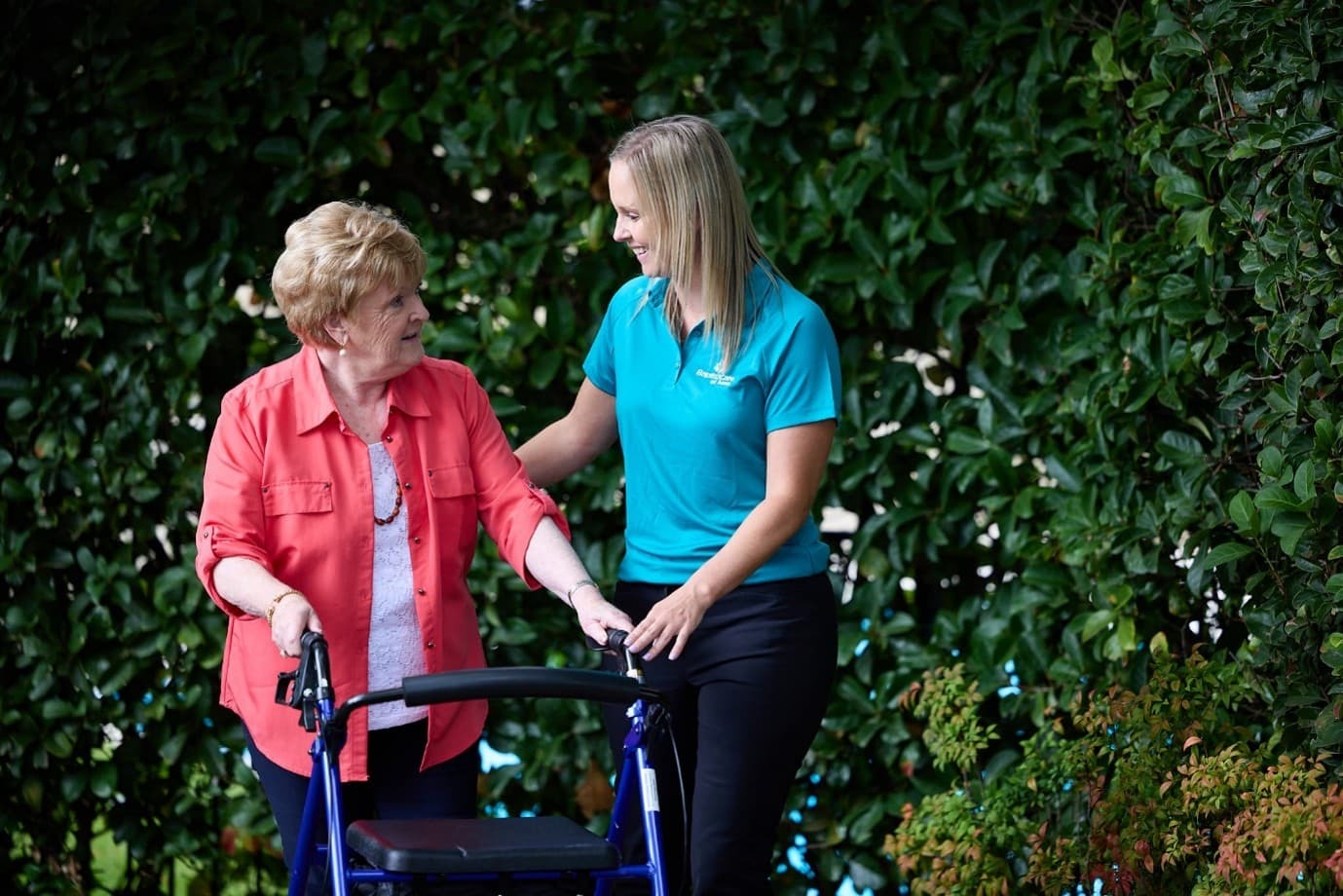
A BaptistCare physiotherapist supporting a client at home. Image for illustrative purposes.
Glenys was previously having to travel to a day clinic for physiotherapy and paying privately through her health fund – something that was made particularly difficult without being able to drive.
"Now, my BaptistCare physiotherapist, Emily, just comes straight to me,” Glenys smiles. “She’s wonderful. She always takes the time to explain why we’re doing things, and what muscles I’m trying to strengthen.”
“She’s even recommended some incredibly helpful books to build my confidence, like James Clear’s Atomic Habits which focuses on the power of making small everyday changes.”
For Emily, it’s clear how much of a difference allied health services are making in Glenys’ life.
“Glenys was previously finding it a challenge to get out of her chair, but now she can do it with more ease and confidence having followed our home exercise program, ” says Emily. “She also walks out to the mailbox to collect her own mail from time to time, which is a big win.”
“We’re working with everyday tasks, but they hold a lot of meaning in terms of staying independent and being able to live with confidence at home.”
— Emily, Physiotherapist
Emily says that working as part of a team of allied health professionals means Glenys’ care can be closely coordinated.
“Keeping in regular contact with Glenys’ occupational therapist and care manager allows us to approach Glenys’ care from a holistic perspective,” says Emily.
“By looking at the bigger picture and working together, we can identify and address multiple aspects of care at once rather than simply approaching things from a one-dimensional perspective.”
Whilst Glenys’ falls are still a risk, that risk is getting smaller each day as she builds strength, confidence and has the right supports in place.
Many hands, one plan
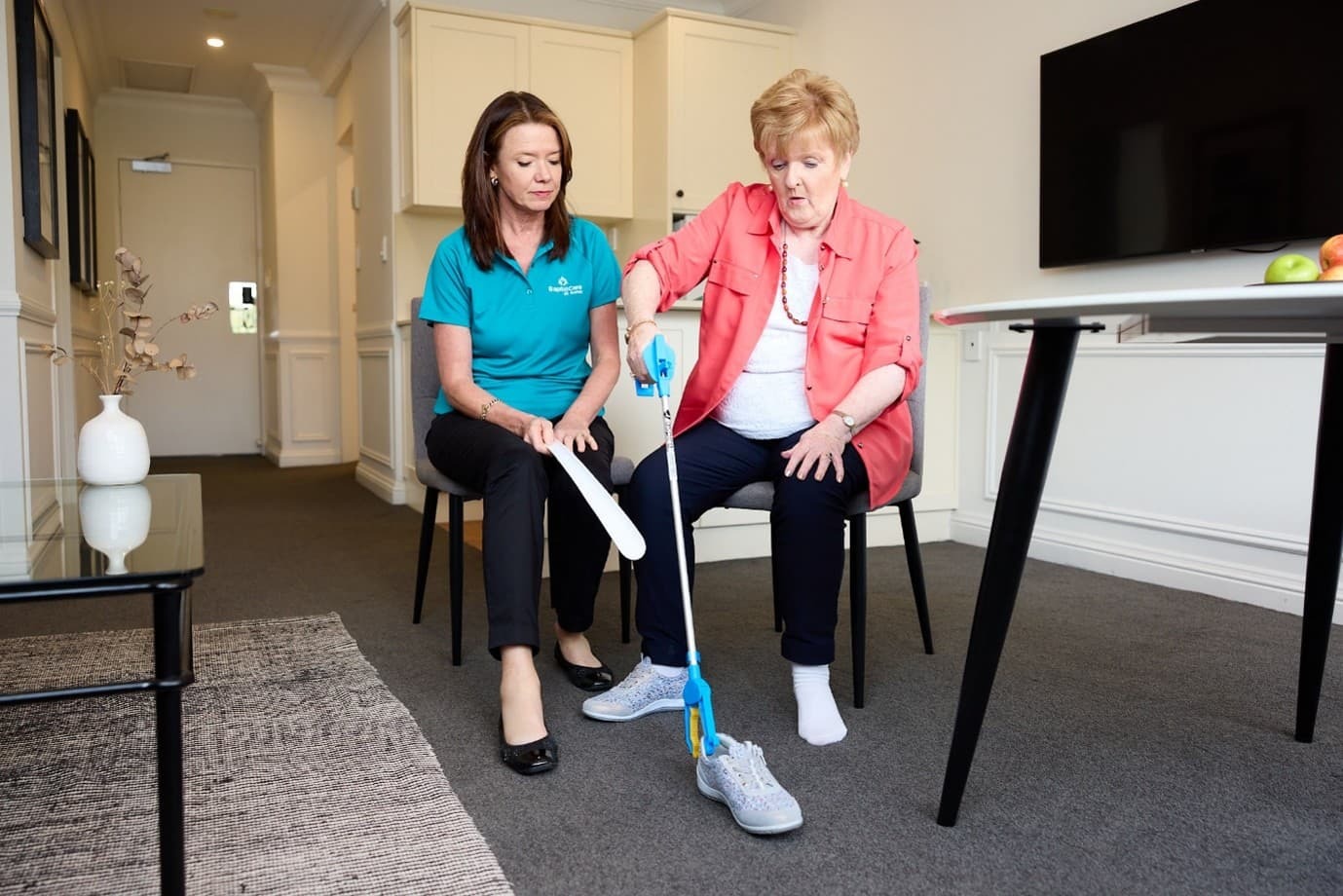
A BaptistCare occupational therapist supporting a client at home. Image for illustrative purposes.
Occupational Therapist, Veronica, also played an important role in making life easier for Glenys.
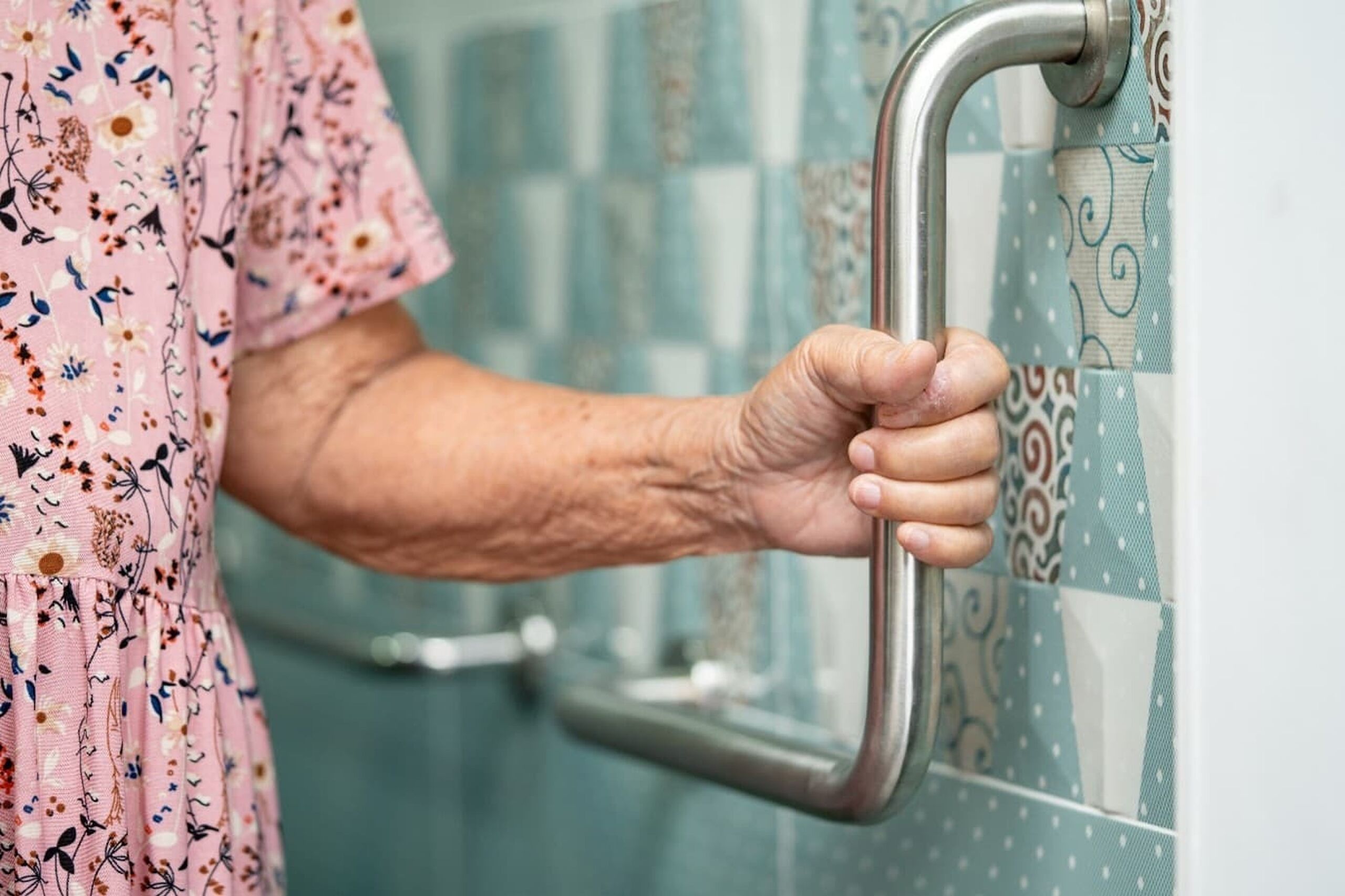
After noting that one of Glenys’ falls had been caused by tripping on a rug, she assessed the rest of the house to ensure all pathways were clear and safe. She also advocated for funding for equipment suited to Glenys' particular needs. Her shower, for example, had limited space for a standard grab rail, so Veronica advocated for a floor-to-ceiling transfer pole that works in a much tighter space.
She also arranged for dressing aids that could help Glenys with things like putting on socks and pants.
Once again - small tasks, but with big meaning.
“Like many people, Glenys was pleasantly surprised to see how simple changes could make such a difference,” Veronica remarks.
For example, moving her bed just 20 centimetres gave her enough space to use her walker safely in the bedroom. A bed ladder now helps her easily reposition in bed.
"As occupational therapists, we're trained to understand each client's individual needs, find creative solutions and, importantly, advocate on their behalf for the funding they need."
— Veronica, Occupational Therapist
Someone in your corner
Glenys says that having all this help has an added benefit she hadn’t foreseen – knowing there are people in your corner when it comes to navigating the aged care system.
“The funding packages can be tricky to get your head around,” says Glenys. “Having someone to guide you through all of that makes such a difference, that’s why I’m so grateful to Anna and everyone else who’s supporting me.”
— Glenys
For example, she never thought she’d be able to have home modifications installed throughout her home, all of which were heavily subsidised by her funding package. Anna was able to arrange that for her.
“I now have a lovely ramp at the front door, which is so helpful,” Glenys shares. “They’ve even adjusted one of the steps down into my laundry which was big and a bit tricky to navigate. The team just think of everything.”
Armed with her shiny new indoor and outdoor walkers, Glenys is over the moon and says she’s like a child with new toys.
Allied health: for everyone, everywhere
This year’s theme for Allied Health Professions Day, for everyone, everywhere, focuses on the accessibility of these crucial services – something that’s particularly important for older people living at home.
Allied health support can be quiet, practical and highly individual. It might mean installing a grab rail in the right spot, arranging an exercise program that builds someone’s confidence as well as their strength, or simply a team that talks regularly about your care and shares what they know.
As Physiotherapist Emily says, “as a physio, I can address one aspect of someone’s care, but as an allied health team, we can address a whole host of things that make a huge difference to somebody’s life. It means each person gets the best care possible.”