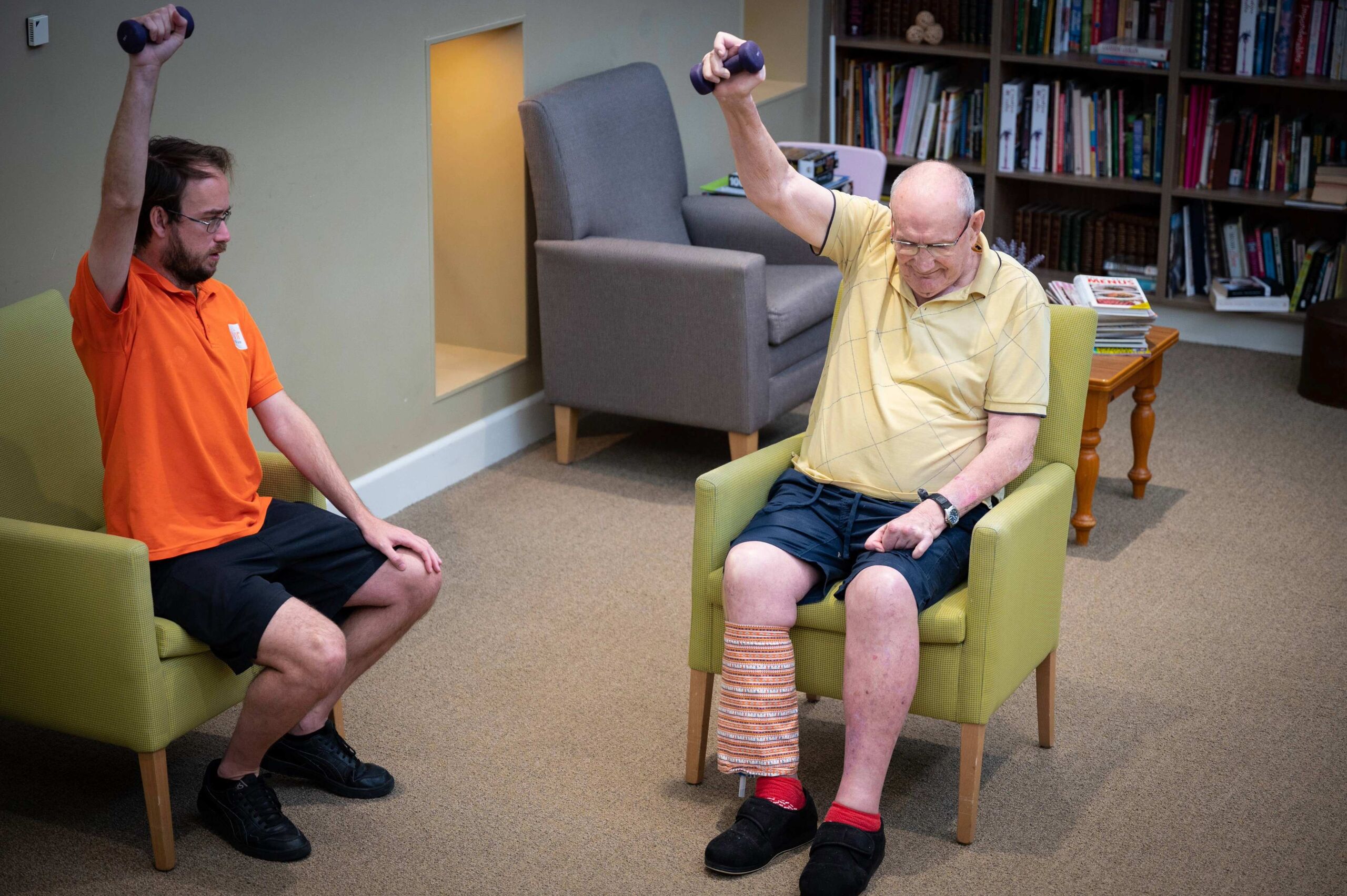
Improving physical strength and mobility
Regular movement helps maintain muscle strength, flexibility, and coordination – all of which contribute to how easily everyday tasks get done. Getting up from a chair, carrying something, reaching for an item on a shelf: these small moments of physical independence are supported by consistent, appropriate exercise.
In a residential aged care setting, group exercise programs are designed to work with each resident's current abilities and to build on them gradually over time. The goal is maintaining and, where possible, improving functional movement, supporting you to stay as independent as they can in their daily lives.
Supporting balance and reducing falls risk
Falls are one of the most significant health risks for older adults, and balance training is one of the most effective ways to reduce that risk. Group exercise sessions in aged care homes typically incorporate exercises that focus on stability, safe movement, and spatial awareness.
Having a trained professional leading the session adds an important layer of safety as you’re guided through movements at an appropriate pace, with modifications available, and any concerns about your mobility or health can be monitored and responded to in real time.
Boosting mental health and emotional wellbeing
Physical activity has a well-documented effect on mood. Movement encourages the release of endorphins, which can lift mood and reduce feelings of stress and anxiety. For residents who may be navigating significant life changes, that effect is meaningful.
Beyond the physiological, exercise also contributes to a sense of achievement and routine – two things that support emotional steadiness. Regular participation in a structured activity gives the day shape and something to look forward to, and the cumulative effect on sleep quality and overall sense of wellbeing can be considerable.
Encouraging social connection
One of the less obvious but genuinely significant benefits of group exercise is what happens between people during and around the session. Shared activity creates a natural context for conversation; a hello before class, a laugh during, a chat over morning tea afterwards.
For residents who may have fewer spontaneous opportunities for social contact than they did earlier in life, these regular points of connection matter. Group exercise is just one way residents can stay socially connected and engaged.
Increasing motivation and consistency
Exercising alongside others tends to support consistency in a way that solo activity sometimes doesn't. There's a social element to showing up (familiar faces, a shared routine, gentle encouragement from peers and staff) that makes participation feel easier to sustain over time.
Structured programs led by trained staff provide accountability without pressure. Residents know when sessions are, what to expect, and that there's someone there to guide them through. That predictability and support removes some of the barriers that can make exercise feel like a hurdle when it's done alone.
Safety and professional support in aged care settings
All group exercise programs in BaptistCare aged care homes are designed and supervised by trained professionals. Sessions are adapted to suit your health, mobility, and energy levels, with individual considerations factored in from the start.
Health and mobility are monitored over time, so that programs can be adjusted as your needs change. Safety is always the priority, and within that, the aim is for exercise to feel enjoyable, not effortful.