Finding connection and confidence with BaptistCare Refresh Retreats
Dementia touches hundreds of thousands of Australian families, often changing everyday life in ways no one can fully prepare for.
Scroll to Explore
18 September 2026
Stories
| Home Care
Dementia touches hundreds of thousands of Australian families, often changing everyday life in ways no one can fully prepare for. For carers, it can bring uncertainty, emotional adjustment and the challenge of adapting to new routines and responsibilities.
Dementia Action Week (21–27 Sep) is an opportunity to learn more about dementia, better understand the supports available and explore ways to help your loved one continue living well at home for longer.
In this article:
What is dementia?
First steps after a diagnosis;
What kind of help is available?
BaptistCare Refresh Retreats;
Dementia Action Week.
What is dementia?
Dementia is not one condition, but a collection of symptoms and changes in thinking, memory, communication and behaviour caused by disorders affecting the brain.
While it can affect people in different ways, common signs may include:
memory loss;
difficulty finding words;
confusion about time or place;
changes in mood or behaviour;
difficulty making decisions; and
trouble completing familiar tasks.
Dementia is generally progressive, meaning that symptoms and behaviours tend to change over time.
In the early stages, these can be subtle and many people are able to live independently with a little extra support.
As dementia progresses, people often need more help with daily tasks, and communication and memory changes become more noticeable.
In the later stages, a person may require increased support with day-to-day activities. This isn't a fixed timeline; the pace and pattern of change vary significantly from person to person, which is one of the reasons early support and planning can be so valuable.
Importantly, many people living with dementia continue to enjoy meaningful relationships, participate in their communities, make decisions about the support they receive and live fulfilling lives for many years after diagnosis. This is why access to information, support and planning can make such a positive difference.
Living well after a diagnosis: first steps
Beyond the emotional adjustment, there are some practical steps you can take to help you feel more in control early on. These might include:
starting the conversation with your GP and healthcare team as soon as possible after diagnosis and asking them to refer you to local support organisations;
arranging an aged care assessment to understand what support you're eligible for;
looking into legal and financial planning, such as setting up an Enduring Power of Attorney and Guardianship;
connecting with a dementia support service, such as the National Dementia Helpline, for information and guidance;
talking with family about roles and expectations, so responsibilities don't fall to one person alone; and
planning ahead for regular carer respite to avoid burnout and exhaustion.
Building a trusted circle of support, including people who understand what you’re going through, can make things feel more manageable now and less overwhelming later.
Small adjustments at home can help your loved one maintain independence and continue living well at home for longer. This could include introducing simple routines or supportive technology.
What kind of help is available?
At BaptistCare, we know how important it is for people living with dementia to feel safe, comfortable and connected at home for as long as possible.
Home care support can make life more manageable, while supporting independence and wellbeing. The type and level of support you're eligible for is usually determined through an aged care assessment, which looks at your loved one's needs and connects them with an appropriate Support at Home (SaH) package. From there, services can be tailored and adjusted as the person’s needs change over time, so your loved one isn't locked into a fixed level of care that no longer fits.
A Support at Home package may include:
help with household tasks and meals;
transport and social connection;
personal care;
nursing, allied health and dementia-specific support;
palliative care at home; and
respite care.
But support isn’t just about practical care. Sometimes it’s about giving carers space to pause, re-energise and understand dementia, so they can keep caring with confidence, while staying close to their loved one. That’s exactly what BaptistCare at home Refresh Retreats are designed to support.
Looking after yourself as carer
It's easy for carers to put their own needs last, but caring for someone with dementia can be physically and emotionally demanding over time. Feelings of exhaustion, grief, guilt or isolation are common, even when you love the person you're caring for deeply.
Looking after your own wellbeing isn't a luxury, it helps you continue supporting your loved one whilst also maintaining your own health and wellbeing.
This might mean accepting help from family or friends, using respite care so you can rest, or simply talking with others who understand what you're going through.
This is where structured support programs, like BaptistCare Refresh Retreats, can make a real difference – especially if you’re in the early stages following a dementia diagnosis.
BaptistCare Refresh Retreats
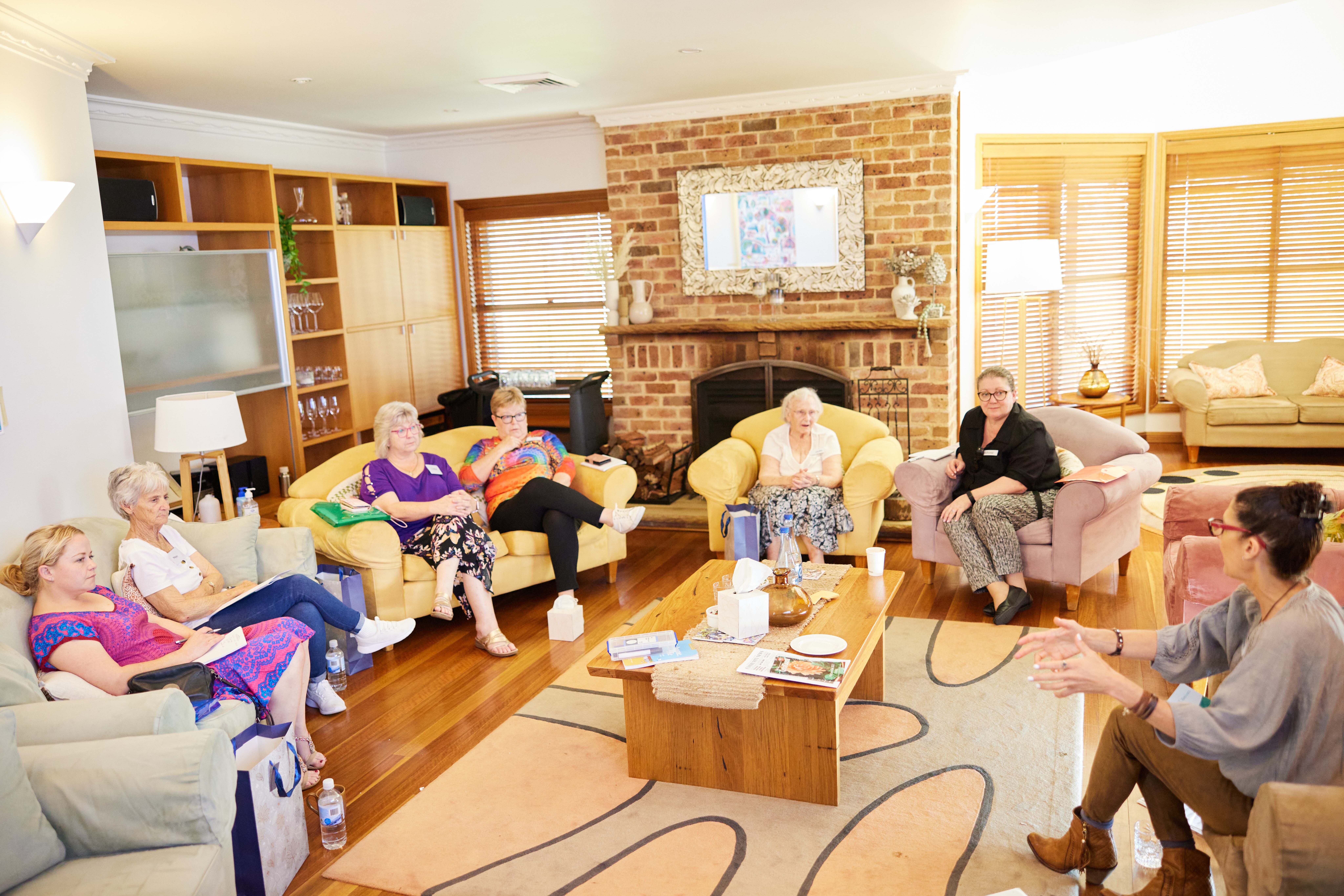
Held across NSW, the ACT and WA, BaptistCare Refresh Retreats are for people living with dementia and their carers. These three-day, two-night getaways offer practical education, shared experiences and meaningful time together. While carers take part in small-group sessions to build skills and confidence, the person they care for is supported nearby and involved in engaging activities.
Small group sessions for carers typically cover practical topics such as:
understanding dementia's progression;
communication strategies;
planning for future care needs; and
connecting with community supports.
For many people, the retreats provide something just as valuable as information: reassurance. When Cathy and her husband Peter attended a Refresh Retreat at Noonaweena on the NSW Central Coast, they were in the early stages following Peter's diagnosis. Cathy says hearing couples share similar challenges helped them realise they weren’t alone.
She also noticed Peter becoming more confident and open to accessing support. Through friendships at the retreat, he became more open to support at home, including respite care. “Now he sees it as a positive experience,”she says.
Pauline and her husband Robert attended a retreat in Port Macquarie for practical guidance and reassurance about the future.
“Dementia can move quickly. You might need certain information in six months, or you might need it in three,” Pauline says.
Pauline says one of the biggest shifts was seeing Robert regain confidence.
“The retreat reminded Robert he’s still capable… it was a confidence shift,” she says.
It also reinforced the importance of caring for her own wellbeing.
Many carers who attend Refresh Retreats describe similar feelings afterwards: relief, encouragement and a renewed sense of confidence.
After attending a retreat at Thistle Hill, Patricia said that when her husband was first diagnosed she felt “overwhelmed and lost”, but the retreat helped her feel “supported and cared for, both of us, now and in the future”.
Another carer, Robert, reflected on how exhausting caring can sometimes feel, describing it as “24/7… 365 days”. After attending a retreat at Noonaweena, he said the experience helped him “feel better about myself” and encouraged him to plan regular respite moving forward.
Dementia Action Week
Whether you're newly navigating a dementia diagnosis or further along the journey, you don't have to figure it out alone. Support is available at every stage, and reaching out is often the first step toward feeling more confident about what lies ahead.